
The History of the Iraqi Most Wanted Playing Cards
How the Defense Intelligence Agency turned 52 members of Saddam's regime into the most famous deck of cards in military history.
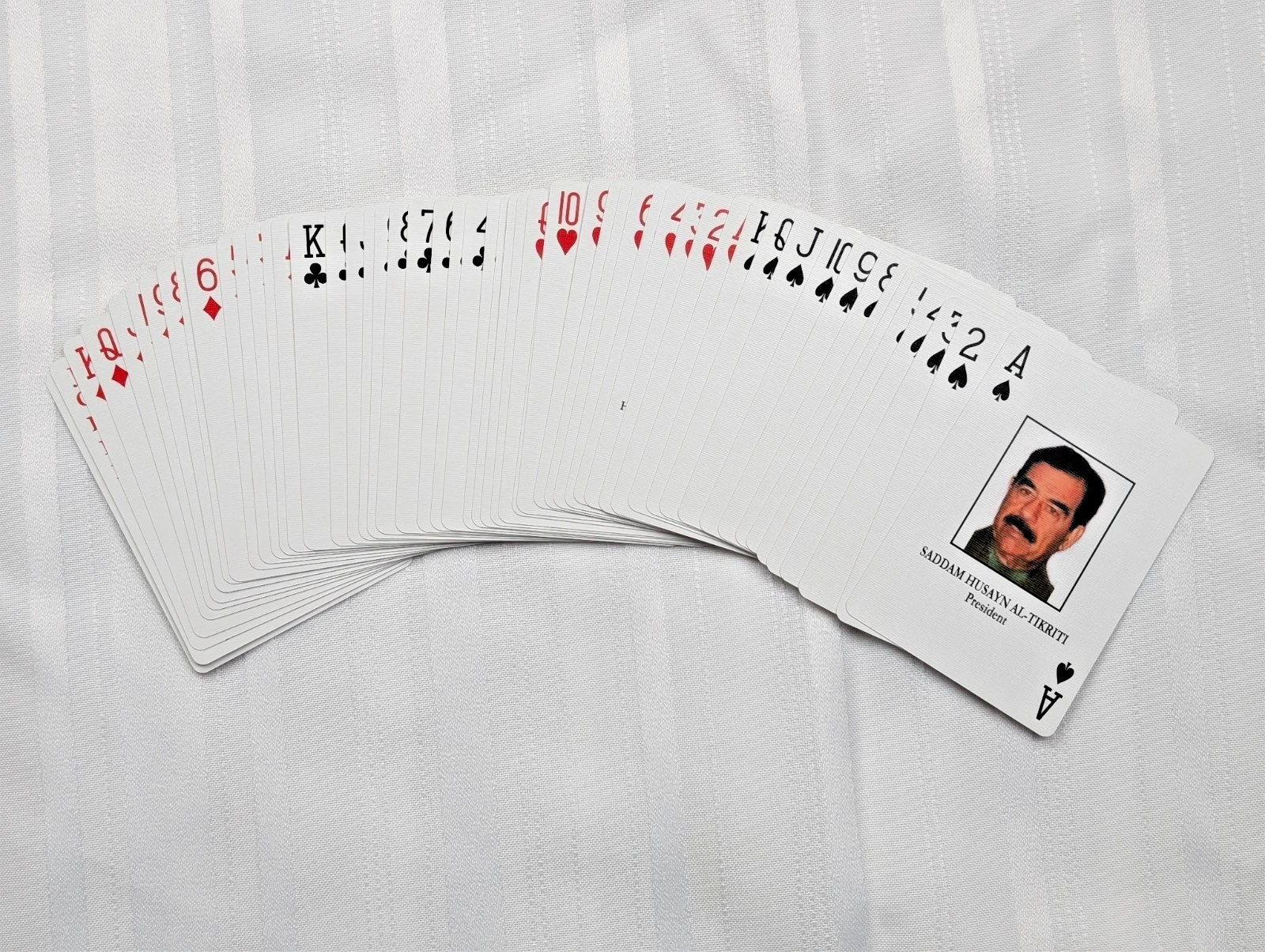
April 2003: A Deck Like No Other
In the opening weeks of Operation Iraqi Freedom, U.S. forces faced a problem. Tens of thousands of American troops were sweeping through Iraq, encountering regime officials at checkpoints, in raids, and during patrols. But most soldiers had no idea what these high-value targets looked like.
The solution came from the Defense Intelligence Agency (DIA), working with U.S. Central Command (CENTCOM). They took the names and photographs of the 52 most wanted members of Saddam Hussein's government and printed them on a standard deck of playing cards. The idea was simple and brilliant: soldiers already carried playing cards to pass the time. Now those same cards could help them identify wanted fugitives.
The first decks were distributed to troops in Iraq in April 2003, just weeks after the invasion began on March 20th. Within days, they became the most talked-about deck of cards in the world.
How the Deck Was Organized
The 52 personalities were assigned to cards based on their importance to the regime, with the four suits ranked by significance:
- Spades — the highest-ranking and most wanted officials
- Hearts — the second tier of wanted figures
- Clubs — the third tier
- Diamonds — the fourth tier
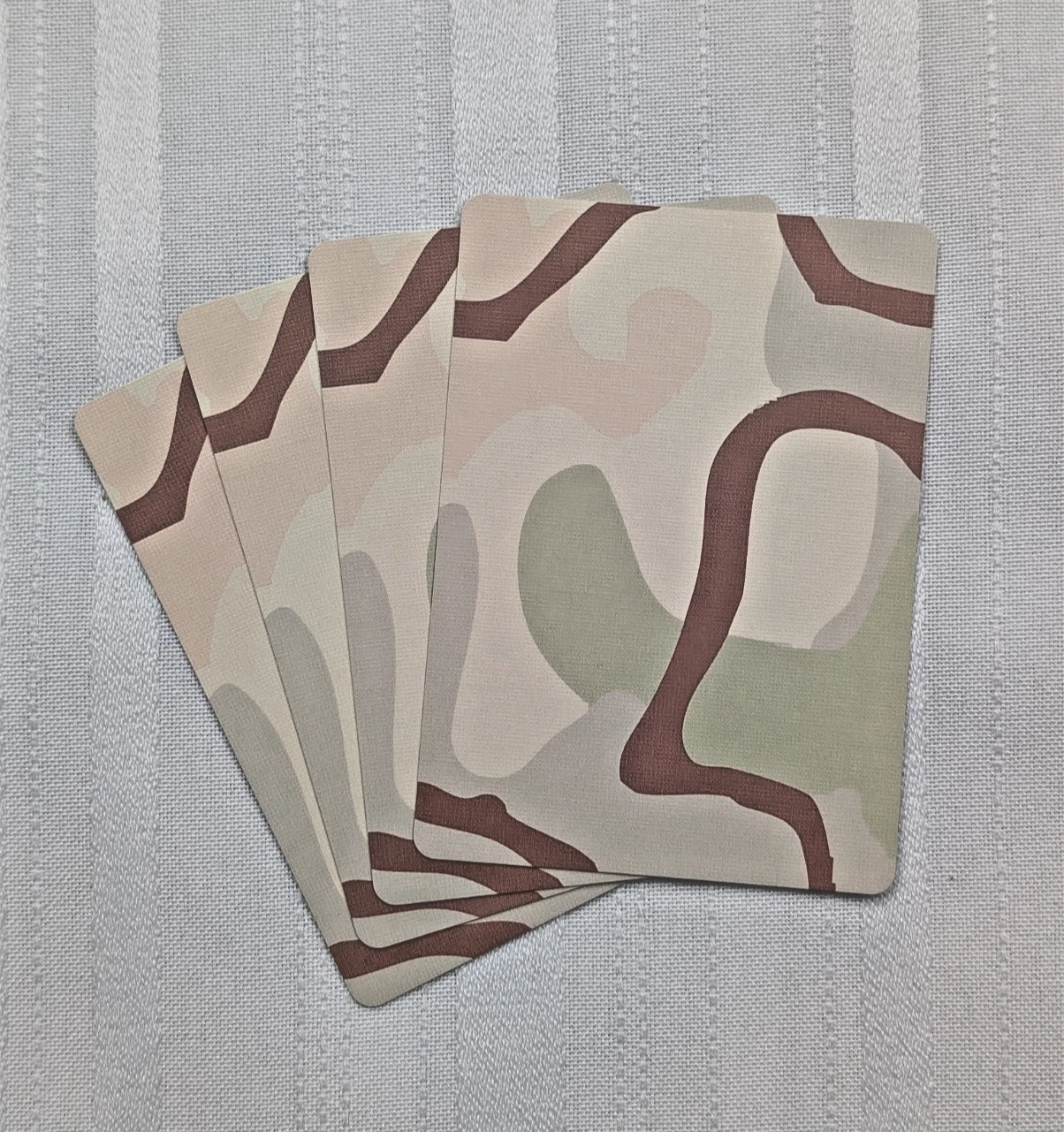
Within each suit, the Ace was the most wanted, followed by King, Queen, Jack, and then 10 down to 2. The two Jokers carried additional information to help soldiers identify the cards' subjects.
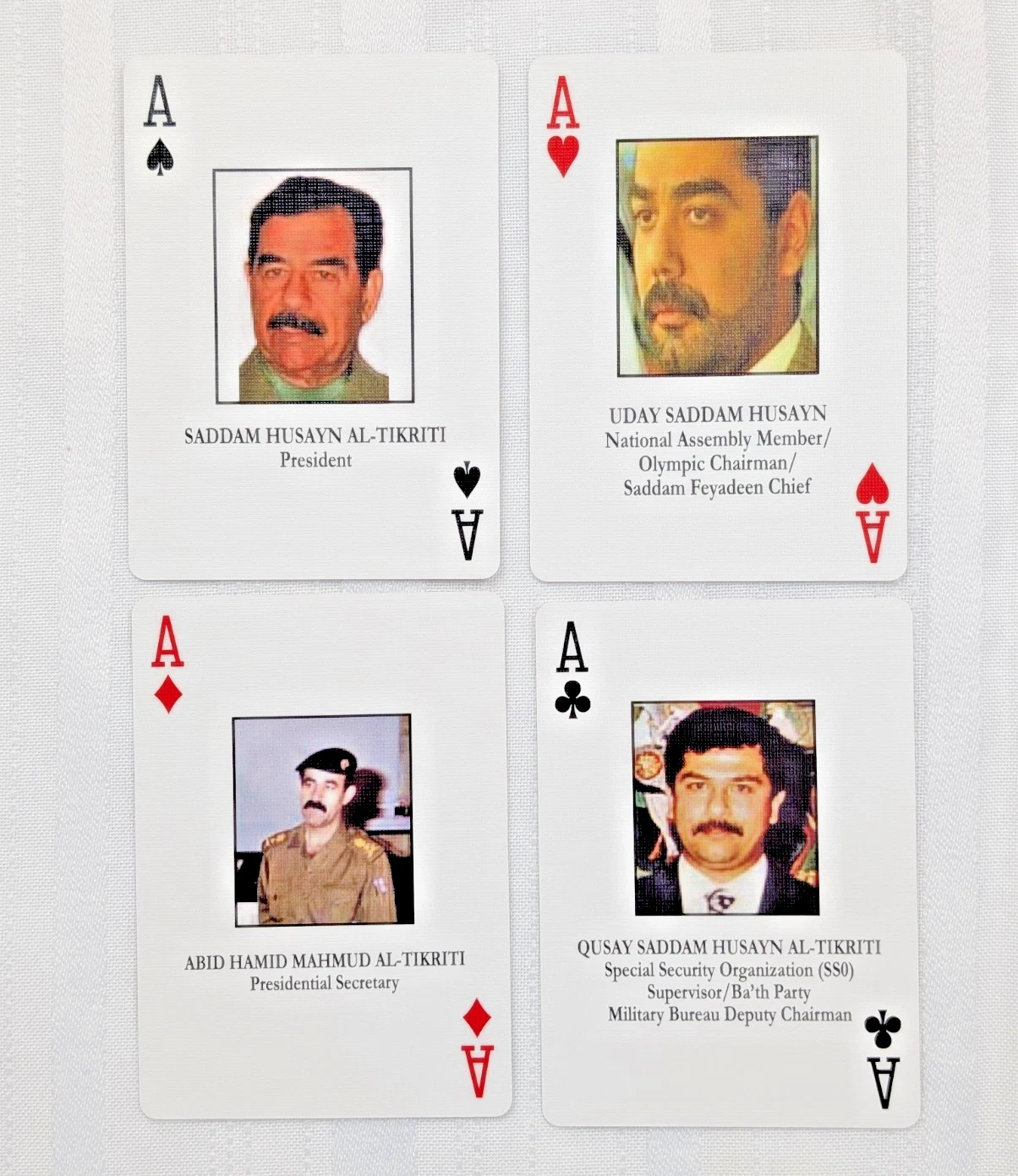
The Ace of Spades: Saddam Hussein
The most famous card in the deck — the Ace of Spades — featured Saddam Hussein himself, President of Iraq and the primary target of the entire campaign. The card bore his photograph and the designation "Saddam Husayn Al-Tikriti, President."
Saddam went into hiding after the fall of Baghdad on April 9, 2003. For eight months, he evaded capture while a massive manhunt unfolded across Iraq. He was finally found on December 13, 2003, hiding in a small underground bunker — known as a "spider hole" — on a farm near his hometown of Tikrit. American soldiers from the 4th Infantry Division pulled him from the hole, disheveled and disoriented. The Ace of Spades had been captured.
The Other Top Cards
Ace of Clubs — Qusay Hussein
Saddam's younger son and the regime's security apparatus chief. Qusay controlled the Republican Guard and the Special Security Organization. He was killed alongside his brother Uday during a raid by the 101st Airborne Division in Mosul on July 22, 2003.
Ace of Hearts — Uday Hussein
Saddam's eldest son, notorious for his brutality. Uday ran the Iraqi Olympic Committee and the Fedayeen Saddam paramilitary force. He was killed in the same Mosul raid as his brother Qusay.
King of Spades — Ali Hassan al-Majid ("Chemical Ali")
Saddam's cousin, infamous for ordering chemical weapons attacks against Kurdish civilians in the Anfal genocide of 1988, which killed an estimated 50,000 to 100,000 people. He was captured in August 2003 and executed in 2010.
Ace of Diamonds — Abid Hamid Mahmud al-Tikriti
Saddam's personal secretary and the most powerful man in Iraq after Saddam himself. He controlled access to the president and was considered the gatekeeper of the regime. Captured in June 2003.
Queen of Spades — Muhammad Hamza al-Zubaydi
Former Prime Minister of Iraq, known for his brutal suppression of the 1991 Shia uprising in southern Iraq. Captured in April 2003.
King of Clubs — Izzat Ibrahim al-Douri
Vice Chairman of the Ba'ath Party Revolutionary Command Council and one of the most elusive figures on the list. Al-Douri was the highest-ranking official to evade capture for the longest time, becoming a leader of the post-invasion insurgency. He was reportedly killed in 2015, though his death was disputed for years.
Five of Spades — Huda Salih Mahdi Ammash ("Mrs. Anthrax")
One of the few women in the deck, Ammash was a microbiologist and Ba'ath Party official suspected of involvement in Iraq's biological weapons program. She surrendered in May 2003 and was eventually released in 2005.
Eight of Hearts — Tariq Aziz
Iraq's Deputy Prime Minister and the international face of Saddam's regime. A Christian in a predominantly Muslim government, Aziz was one of the most recognizable Iraqi officials in the West. He surrendered in April 2003 and died in prison in 2015.
How Effective Were the Cards?
The cards were remarkably effective. By the time major combat operations ended, most of the 52 personalities had been captured or killed. Soldiers reported that the cards helped them memorize faces they might encounter, turning an intelligence briefing into something they could study during downtime.
The deck also had an unexpected psychological effect on the wanted officials themselves. Several later said that being featured on the cards increased the pressure on them and made it harder to find people willing to shelter them.
The success of the "personality identification playing cards" (their official name) led to similar decks being created for other conflicts and intelligence purposes in the years that followed.
From Battlefield Tool to Cultural Icon
Almost immediately, the cards transcended their military purpose. News networks showed them on screen constantly. Reproductions flooded the market. The phrase "deck of cards" became shorthand for the most wanted list itself.
The cards appeared in movies, TV shows, books, and documentaries. The Ace of Spades became one of the most recognizable images of the entire Iraq War — a single playing card that symbolized the hunt for a dictator.
Today, the Iraqi Most Wanted playing cards remain one of the most sought-after pieces of military memorabilia from the post-9/11 era. They appeal to military history enthusiasts, veterans, card collectors, and anyone interested in one of the most creative intelligence tools ever devised.
The Complete List: All 52 Cards
Below is the full list of all 52 personalities featured in the deck, organized by suit and rank.
Spades (Highest Priority)
- Ace — Saddam Husayn Al-Tikriti, President
- King — Ali Hasan Al-Majid, Presidential Advisor ("Chemical Ali")
- Queen — Muhammad Hamza Al-Zubaydi, Former PM
- Jack — Ibrahim Ahmad Abd Al-Sattar Muhammad, Chief of Staff
- 10 — Kamal Mustafa Abdallah Sultan, Secretary of Republican Guard
- 9 — Jamal Mustafa Abdallah Sultan, Deputy Head, Tribal Affairs
- 8 — Sayf Al-Din Fulayyih Hasan Taha, Republican Guard Chief of Staff
- 7 — Latif Nusayyif Jasim Al-Dulaymi, Director of Military Intelligence
- 6 — Rafi Abd Al-Latif Tilfah, Director of SSO
- 5 — Huda Salih Mahdi Ammash, Ba'ath Party Official ("Mrs. Anthrax")
- 4 — Barzan Abd Al-Ghafur Sulayman, Special Republican Guard Commander
- 3 — Zuhayr Talib Abd Al-Sattar, Deputy Director of SSO
- 2 — Rukan Razuqi Abd Al-Ghafur, Director of Tribal Affairs
Hearts
- Ace — Uday Saddam Hussein, Saddam's Eldest Son
- King — Izzat Ibrahim Al-Douri, RCC Vice Chairman
- Queen — Kamal Mustafa Abdallah, Secretary of Republican Guard
- Jack — Ayad Futayyih Khalifa, Chief of Saddam's Tribal Council
- 10 — Aziz Salih Al-Numan, Ba'ath Party Chairman, East Baghdad
- 9 — Muzahim Sa'b Hasan, Air Defense Forces Commander
- 8 — Tariq Aziz, Deputy Prime Minister
- 7 — Mahmud Dhiyab Al-Ahmad, Interior Minister
- 6 — Hamid Raja Shalah, Air Force Commander
- 5 — Husayn Al-Awadi, Deputy Ba'ath Party Chairman
- 4 — Samir Abd Al-Aziz Al-Najim, Ba'ath Party Chairman, East Baghdad
- 3 — Walid Hamid Tawfiq, Governor of Basra
- 2 — Muhammad Zimam Abd Al-Razzaq, Ba'ath Regional Command Chairman
Clubs
- Ace — Qusay Saddam Hussein, Saddam's Younger Son
- King — Aziz Salih Al-Numan, Ba'ath Party Chairman
- Queen — Walid Hamid Tawfiq, Ba'ath Party Chairman, Basra
- Jack — Ugla Abid Saqr Al-Kubaysi, Ba'ath Regional Command Chairman
- 10 — Abd Al-Baqi Abd Al-Karim, Ba'ath Regional Command Chairman
- 9 — Samir Abd Al-Aziz Al-Najim, Ba'ath Party Chairman
- 8 — Humam Abd Al-Khaliq, Minister of Higher Education
- 7 — Sultan Hashim Ahmad, Defense Minister
- 6 — Husayn Rashid Muhammad, Chief of Armed Forces
- 5 — Tahir Jalil Habbush, Director of Intelligence Service
- 4 — Amir Hamudi Hasan Al-Sa'di, Presidential Advisor for WMD
- 3 — Rashid Taan Kazim, Chief of Army Staff
- 2 — Taha Muhyi Al-Din Ma'ruf, Vice President
Diamonds
- Ace — Abid Hamid Mahmud Al-Tikriti, Presidential Secretary
- King — Taha Yassin Ramadan, Vice President
- Queen — Tahir Jalil Habbush, Intelligence Service Director
- Jack — Rafi Abd Al-Latif Tilfah, SSO Director
- 10 — Abd Al-Tawab Mullah Huwaysh, MIC Director
- 9 — Hikmat Mizban Ibrahim, Finance Minister / RCC Member
- 8 — Muhammad Mahdi Al-Salih, Trade Minister
- 7 — Amir Rashid Muhammad, Oil Minister
- 6 — Abd Al-Khaliq Abd Al-Ghafar, Director of Intelligence
- 5 — Watban Ibrahim Hasan Al-Tikriti, Saddam's Half-Brother
- 4 — Barzan Ibrahim Hasan Al-Tikriti, Saddam's Half-Brother
- 3 — Sab'awi Ibrahim Hasan Al-Tikriti, Saddam's Half-Brother
- 2 — Muhammad Zimam Abd Al-Razzaq, Ba'ath Party Chairman
Own a Piece of History
Our premium reproduction is printed on 300gsm linen-finish card stock with professional card coating — the same quality you'd expect from casino-grade playing cards. Every card faithfully reproduces the original DIA deck.
Buy the Deck — $9.99